Author: Bedliner Review

  • Facts About Polyurea Spray Coatings

    Facts About Polyurea Spray Coatings

    Polyurea is a result of the reaction of diisocyanates and diamines. It is one of the most durable synthetic polymer materials. Here are just a few of the many attributes it has:

    • High strength, with tensile strength greater than 5,000 PSI and tear strength greater than 500 lbs/in
    • 100% solid, with no volatile organic compound (VOC).
    • Large hardness range, adjustable to shore D
    • Excellent chemical resistance
    • Superior resistance to abrasion
    • Water-tight properties

    It is possible to react quickly between diisocyanate, diamine and polyurea. Exothermic heat pushes the reaction towards completion. It is not necessary to have a complicated reactor or adhere to strict conditions. 

    This allows you to mix the two components in a calculated ratio and then apply the mixture to a substrate. You can apply different thicknesses of tough polyurea coatings to any substrate. A high-pressure spraying machine is used to spray a polyurea coating uniformly on the surface. This is the foundation of fast-setting polyurea paint systems.


    Polyurea Spray Coatings are fast-setting and can be used in a variety of industries and markets.
     Common raw materials require low viscosity and low freezing points. They also have high fast reactivity. For its protection purposes, these raw materials must create a thin, high-strength layer. 
    ArmorThane offers additional raw materials that can be used to improve product performance and offer new solutions. 

    Polyurea spray systems are versatile and a great choice for many applications. This blog is intended to encourage and start discussions about improving existing systems and creating new ones that are more durable, long-lasting, and efficient.


    Here are five facts about fast-setting spray systems of polyurea:


    1. Polyurea Spray Coatings are used in a wide range of industries

    Polyurea Spray Coatings are used in a variety of applications, from mining channels to sporting fields. This spray is suitable for a variety of industries such as:

    • Construction industry: Concrete surface protection, waterproofing, erosion protection.
    • For surfaces protection, manufacturing industry
    • Water industry, storage tanks and pipeline corrosion protection
    • Chemical industry, for chemical-resistant tank liner and corrosion protection of vessels.
    • Concrete industry. To provide floor sealers and protective coatings, surface repairs, or waterproof surfaces.
    • For reinforcement of outdoor dwellings, military industry
    • For abrasion resistance, and corrosion protection in the oil and gas and coal mining industry.

    This is just a small selection of the many uses that this product can be used in industry.

    2. Polyurea Spray Coatings have Different Functions

    Polyurea Spray Coatings are versatile and can be used in a variety of markets.

    A railroad company might use one system of polyurea to protect railcar surfaces from being damaged by an aggregate, and another system to prevent the corrosion of metal surfaces.

    Others functions include:

    • Protecting surfaces from wear and tear or strengthening a part, such as truck bed liners.
    • A swimming pool or reservoir can be waterproofed.
    • Protective coatings for wood surfaces that prevent scratching and scuffing.
    • For durability, reinforcement fabrics and padding are used such as roofing materials or military garments coatings.
    • Spray-on coatings can be applied to soften or harden a surface such as a tabletop. This will provide a more comfortable feel and better impact resistance.
    • Protection of tunnel surfaces against blasts and impacts
    • Protects metal surfaces from corrosion and environmental damage.

    There are many applications for polyurea spray coating systems, from small-sized, spray-coated fracking aggregates to large, spray-coated mining or highway passages.

    3. For many applications, polyurea spray coatings are the material of choice

    It’s no surprise that Polyurea Spray Coatings are versatile and have many functions. Here are some examples:

    • Spray coatings for concrete-mixing tank liners and truck-bed liners
    • Underground-level surface spray layers create a waterproof barrier to sewage tanks, buildings or construction purposes
    • The spraying of sand or rock on the surface provides erosion protection for playgrounds or golf courses and helps to maintain beautiful landscapes.
    • Use decorative applications such as car coatings and high-end waxes for cars
    • Spray coatings of polyurea are used to fertilize. This allows for a time-release that is not affected by the slow decomposition of the thin polyurea film.

    There are endless possibilities for spray polyurea coating applications. The right spray polyurea system can provide long-lasting protection for many applications, regardless the size or shape.

    4. Polyurea Spray Coatings Come in Different Forms

    Different formulations may result in different hardness for the finished layers of fast-setting spray polyurea coatings. They can be clear or colored, elastomeric or foam, matte or glossy, tougher than rubber or hardened as glass, or structured with fillers.

    It all depends on the specific requirements of each application.

    You can create a unique spray coating of polyurea and have environmental resistance properties by using different chemicals or combinations.

    5. Polyurea Spray Coatings are customizable for specific uses

    Spray coatings are all applied the same way with high-pressure spray guns. However, you can apply longer-lasting gel-time formulations using rollers. Modifying the formulation allows for customization to suit a particular application.

    For a good material selection, it is important to consider the environment, intended function and hydrolytic resistance.

    These are some questions to consider:

    • What type of protection is needed?
    • Do you need impact resistance or abrasion resistance for the application?
    • Which type of abrasion is more common: impingement or sliding?
    • Are the applications dynamic or static in nature?
    • What is the importance of UV and direct sunlight resistance?
    • What is the operating temperature range?
    • What type of chemical exposure can be expected?
    • What is the importance of hydrolytic resistance? Operation in hot or humid environments

    A bathroom tub application will need a different formula than a pool application, as the latter requires greater UV resistance and chemical (chlorine resistance). These formulas are not the same as those needed to protect a fracking pipe liner. All three applications require hydrolytic resistance.

    ArmorThane offers a wide range of diamine cures that can be used in both TDI- and MDI-based systems when it comes to choosing the best fast-setting polyurea.

    DETDA, DMTDA and MBOEA are all liquid curative formulations.

    ArmorThane offers a broad range of polyester and polyether polyols that can be used in spray polyurethane MDI systems. It is highly resistant to hydrolysis, has good dynamic performance and is food-contact compliant.

    ArmorThane has a wide range of raw materials, and they can also help you to formulate diamines, low-viscosity diamines, and/or diamine formulation systems to provide various properties to meet your project requirements.

    ArmorThane’s technical team can assist you in finding a quick-setting spray system for polyurea that reduces work and increases the durability and longevity of your products.


  • How Do ArmorThane Roofing Jobs hold Up After 8 Years?

    Image result for A Lasting Polyurea Roof System

    For the four-person staff utilized from ArmorThane, recoating the leaking roof at the Springfield Plaza shopping center in Springfield, Mo, was anything but routine. Not only did they need to contend with the harsh weather conditions, overspray, and also operating at elevations, but they also needed to keep the overspray from “splattering” on the building.
    The repair: roughly 80 mils (2,032.0 microns) of ArmorThane’s own Highline 310 chemical: An amazing quality product!
    But the task was finished in 2012: eight years ago. Has it stood the test of time?
    Overspray as well as Higher Savings
    Given that the conclusion of the 11,000-square-foot task, ArmorThane has grown 30 percent in roofing sales, according to President Garry Froese. Although this job was the company’s most difficult one at the time, they’ve since finished additional similar projects.
    “Every job has problems when applying splashed coatings, as you should handle all weather as well as overspray challenges,” Froese stated. To alleviate overspray on this job, the team marked off the parking area and utilized big outdoor tents to contain the spray.
    “Overspray is a consistent concern when using sprayed-on coatings,” Froese proceeded. “At winds over 10 miles per hour, also under an outdoor tent, it must not be attempted. We utilized big outdoor tents– 12 feet by 20 feet with two individuals working to use a huge adequate section at one time to make sure that the coating all links in.”
    Froese, who makes it a practice to call each of his previous customers annually, noted that there had been no necessity for any repairs or updates to the Springfield Plaza roof, since the coating was completed.
    According to him, the waterproofing system, which came with a 15-year warranty, has been carrying out “perfectly.” Not only did the system address the internal sweating problem, it also supplied the customer energy cost savings. “They have lowered energy expense,” he claimed. Certain numbers for this certain job are not readily available, because the center is rented out; Froese’s various other clients have experienced 20 to 30 percent cost savings with similar systems.
    And if the Springfield Plaza owner wants a “refresh” on their roof system, ArmorThane is ready and eager. “Any roof will obtain filthy over the years, and if an owner desires to refresh the look, we would agree to push clean and also include extra coating at a reasonably small square footage cost,” Froese discussed.
    Keeping Busy
    For this job, Froese had to deal with the client to obtain them to approve a system that had not been in the first scope. One technique he made use of was to develop prototypes of the system without the spray polyurethane foam, likewise called spray foam, and position them on his jacuzzi cover “to replicate warm rising in the structure after a chilly evening,” according to the initial article. 
    The outcomes were telling enough to obtain the client on board. “As a chemist by career, I enjoy difficult tasks,” Froese said of this ingenuity.
    And in the years since finishing this waterproofing roof system, ArmorThane has kept busy. “Since incorporation 30 years ago, we have done several interesting tasks, and this is just one of the hundreds completed.
    Other plans currently on their business agenda include: collaborating with other roof coating service providers in nearly every country and some large scale NATO as well as governmental/military projects in the works. They recently signed a deal with the Iraq government and worked out a deal with the Saudi government.
    Something’s for sure: ArmorThane does not appear to have the words “slow-moving season” in its vernacula
    ArmorThane.com
  • Why ArmorThane’s Polyurea Is Superior To All Others

    Why ArmorThane’s Polyurea Is Superior To All Others

    ArmorThane continues to be your go-to for all of your spray coating needs and services. From the very best products and expert installation technicians, and more, there is no other specialist you ever need to call for your insulation demands. ArmorThane also provides polyurea coating for your building needs as well.

    What is polyurea?
    Polyurea is a rubber-like substance that offers superior surface protection. It is an elastomer, so it is flexible while remaining resilient. Polyurea coatings are typically used for commercial structures but can be and are utilized in an unlimited amount of uses.
    What are the benefits of polyurea coating?
    There are various benefits of a polyurea coating, making it a very useful product on many building sites. The material is climate tolerant, usable at temperatures ranging from -20* to over 300* and will even cure in high humidity. Polyurea coatings offer excellent resistance to thermal shock. It is strong and tough and flexible enough to bridge cracks and be used over joints and linings.
    Polyurea coatings are also seamless and waterproof and have no volatile organic compounds (VOCs) as well as very little odor. These qualities make polyurea coating perfect for protecting commercial structures and equipment of all kinds. Its ability to set quickly and the fast application time set it apart from any other similar technology. ArmorThane offers you the very best and latest technology in spray-applied polyurea coatings.
    What are some common applications for polyurea coatings?
    Most polyurea coating product applications are for commercial uses, as there is not ordinarily a need for such a strong and flexible material for residential buildings. Commercial uses come in a wide range. Here are some suggested product applications:
    * Refrigeration Units
    * Roof Coatings
    * Truck Bed Liners
    * Flooring and Decks
    * Pipe Coatings
    * Water Parks
    * Rail car Linings
    * Tank Coatings & Linings
    * Bridge Coating
    * Joint Fill/Caulk
    * Waste Water Treatment Linings
    * Spray Molding
    * Manhole & Sewer Linings
    * Decorative Design coating Aquarium Lining
    * Landscape & Water Containment
    * Automotive Fascia OEM Molded Parts
    * Fuel Storage & Containment
    As you can see, many of the commercial applications for polyurea coatings involve waterproof lining, fuel storage, and cold storage. This is because of the polyurea coating’s unique waterproof and temperature resistance. There are also a lot of traffic and safety applications because of how strong and almost indestructible the polyurea coatings are.
    Many other companies also benefit from polyurea coatings are sanitary areas such as restaurants and food processing plants. We can even use it over concrete and steel to protect against corrosion and damage. Polyurea is truly a handy material to work with, and ArmorThane is pleased to provide it to their commercial clients.
    To learn more about polyurea coating applications, call the experts at ArmorThane. I commit them not only to providing the very best in products and service, and you can trust that the professional you speak with will be knowledgeable and experienced. Call ArmorThane today for more about polyurea coating solutions.
  • Using ArmorThane’s Polyurea for Blast Protection

    Armorthane was recently selected to assist NATO with testing our ...

    I was surprised to find a company that sells blast-resistant structures recently presented an article concerning the potential risks of polyurea coatings when applied to blast-resistant structures. I am going to respond to this article today!
    The material comprised supposed facts from three supposed scientific studies, though the studies were not referenced by name. Therefore they cannot be verified.

    WHAT IS POLYUREA?
    Polyurea is a highly flexible elastomer. It’s commonly used in the consumer world as a lining for truck beds. It has many industrial uses, like a coating or lining for steel pipes and tanks to protect from corrosion, as a roof coating to give reflectivity and a cooling effect, and as a containment arrangement in marine aquarium designs, to name a few.

    WHAT ABOUT THOSE STUDIES ON POLYUREA AND BLAST-RESISTANCE?
    Our technicians find those studies to be unclear at best, with both positive and adverse conclusions. The reference tests on steel plates of varying thickness were comparable to what you might find on the corrugated walls of a Biomedical research building (BRB).

    When it comes to blast-resistance, the structural integrity of a building’s design is the most important factor in blast protection. Still, the next thing is the protective coating around that structure. The wall panels are essential, but our blast testing revealed that the polyurea sprayed areas could withstand tremendous blasts.

    When the structure itself has redundancies built into the walls and roof, like the wall studs’ close spacing, the outer coating won’t have any bearing on structural integrity.
    There is no doubt polyurea affects blast-resistance. This shows the significance of selecting a good polyurea when blast proofing any structure.

    To sum up, one can only conclude that polyurea protects structures when applied correctly to any structure.
    To learn more about ArmorThane’s blast testing, click here.

  • Why ArmorThane’s Polyurea Is Best For Secondary Containment Jobs

    Why ArmorThane’s Polyurea Is Best For Secondary Containment Jobs

    Image result for WHY POLYUREA COATING IS BEST FOR SECONDARY CONTAINMENT
    Polyurea coatings are great to utilize on industrial structures such as underground pipelines and water vessels.
    However, did you know these coatings are the ideal answer to a secondary containment system?

    What is secondary containment?

    If you work with dangerous chemicals, you may know something about these systems. Secondary containment systems present an extra line of protection if something happens to the primary containment system. For example, if a storage tank that holds wastewater should happen to crack, the secondary system will block any of the liquid to spill out and damage the ecosystem. It’s a temporary measure that shields the atmosphere until the appropriate actions can be taken to fix the primary system.

    Polyurea coatings are excellent for any secondary containment systems, in particular:

    Oil and gas wells
    Oil storage tank farms
    Sumps and trenches
    Drum storage areas
    Chemical facilities and storage spaces

    You might be wondering how can a spray-on polyurea coating acts as a secondary containment system?
    What the coating does is produce a leak-proof barrier that blocks any of the material inside the primary containment unit from emerging. As we’ve mentioned before, the polyurea solution is not only watertight but is very amenable. So if it’s a bone-chilling kind of day and everything feels tight, the chemical will protect from any splinterings. The same goes for a sweltering heatwave, where everything doubles in size. The polyurea will still keep everything in place.

    We’ve also discussed how polyurea coatings are resistant to water damage, such as corrosion or rust. However, that’s not the only weather element that can do some damage. Here in Missouri, we get our fair share of sunny days. Although the sun can be great for your mood and skin, all that ultraviolet exposure can affect a storage tank. For instance, if you have a polyethylene tank, continuous exposure to the UV light can make the substance weak and brittle, leading to cracking. However, this doesn’t happen to a polyurea solution.

    Some companies use a rubber lining, paint, or another surface shield to use as a secondary containment system. However, that can lead to problems:

    A rubber lining doesn’t last nearly as long as a polyurea coating.
    A rubber coating doesn’t have the same abrasion and corrosion resistance.
    There may be weaknesses in these types of coatings that a chemically aggressive fluid can exploit
    They can be expensive as compared to a polyurea solution.
    There’s a chance that a rubber lining can absorb and possibly release materials that cause contamination.
    At ArmorThane Industrial Coatings, we know how important it is to protect the environment from hazardous materials. The best way for an industry to do that is to use the best type of protection available. That protection is a polyurea solution.

    Contact ArmorThane here!

    armorthane.com

  • Finding The Best Polyurea Spray Gun That Fits Your Needs

    Finding The Best Polyurea Spray Gun That Fits Your Needs


    Whether you’re spraying polyurethane foam insulation in a home, commercial building, rooftop, or applying polyurea to coat a bedliner Graco Plural-Component spray guns are the best you can get in order to get the job done with superior results.You’ll discover that Graco spray guns are easy to use, rugged, reliable and easy to maintain. Use the guide below to find the spray gun that’s ideal for your application and visit ArmorThane.com to get the best available pricing.

    WHAT IS AIRLESS SPRAYING?

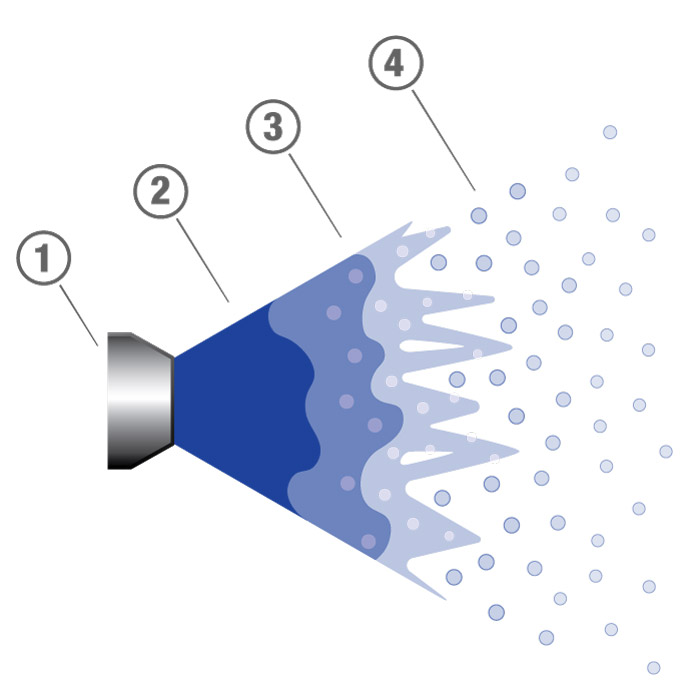
    airless spraying atomization illustration
    In an airless system, fluid is pumped under high pressure through a spray tip. Instead of compressed air, the fluid itself is pressurized, and as it passes through the spray tip, the fluid becomes atomized.
    The tip size and fluid pressure is what determines the material flow rate. The tip also creates the fan pattern. In contrast, air spray systems inject compressed air into the fluid stream of paint to achieve atomization.
    Diagram:
    1. Airless spray tip
    2. Sheet
    3. Disrupted
    4. Atomized fluid


    GRACO FUSION AP – 

    OVERVIEW

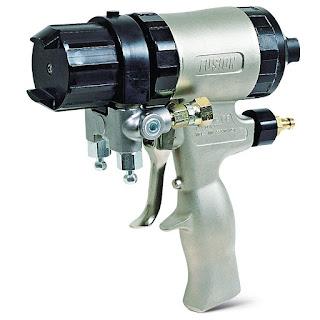
    The Fusion AP Gun handles everything from polyurethane foam to polyurea coatings. With long-life mix chamber and durable side seals, Fusion guns are designed to reduce your maintenance and downtime, and provide a better mix.

    FEATURES

    • Air-blast tip cleaning reduces build-up and tip clogging
    • Hardened stainless steel mix chambers are built to last
    • Daily maintenance in a matter of seconds with the quick-shot grease port
    • Quick-Release Fluid Housing


    FOR ADDITIONAL INFORMATION VISIT ARMORTHANE.COM

    GRACO PROBLER P2 – AIR PURGE

    OVERVIEW

    Recognized by the industry for its superior performance, the P2 gun’s light, easy-to-handle design lets you spray and maneuver easily – even in difficult spraying positions. At the end of the day, maintenance is easy.

    FEATURES

    • Responsive trigger action – double piston design provides more than 300 pounds (136 kg) of triggering force
    • The mix chamber insert can be replaced without replacing the entire chamber
    • Anti-crossover design virtually eliminates possibility of material entering the air piston
    • Ergonomic Handle and Balanced Design


    FOR ADDITIONAL INFORMATION VISIT ARMORTHANE.COM

    GRACO FUSION CS – 

    OVERVIEW

    Graco’s Fusion CS plural-component spray gun with ClearShot (CS) Technology delivers improved productivity and performance throughout the spray day. Every time you pull the trigger, ClearShot Liquid is dispensed into the mix chamber and helps remove any built-up chemical keeping it clean.

    FEATURES

    • Industry-First Quick-Change Front End
    • Variable Flow Setting
    • Chromex™ Coated Side Seals and Mix Chamber
    • Screw-in-Place Side Seals
    • Faster/Shorter Trigger Pull

    VISIT THE PRODUCT PAGE


    FOR ADDITIONAL INFORMATION VISIT ArmorThane.COM

    GRACO FUSION MP – 

    OVERVIEW

    The Fusion Mechanical Purge spray gun’s straightforward design provides excellent mix and material properties in a simple, easy-to-use package. Whether you’re spraying polyurea coatings or spray foam insulation, the rugged Fusion MP handles it all. Its rugged design provides excellent mix and material properties – giving you great results at the Jobsite.

    FEATURES

    • Handles from very low output, thin mil applications to large, high flow, high-output applications just by changing the mix module and tip
    • Easy mechanical cleaning – mix modules and tips are cleaned with a drill bit
    • Smoother finish and better atomization
    • Advanced design provides excellent mix and material properties

    FOR ADDITIONAL INFORMATION VISIT ARMORTHANE.COM

  • MORE ON POLYUREA COATING SOLUTIONS


    Image result for COATING SOLUTIONSArmorThane continues to be your go-to for all of your insulation needs and services. From the very best products and expert installation technicians and more, there is no other professional you ever need call for your insulation needs. ArmorThane also provides polyurea coating for your building needs.
    What is polyurea coating?
    Polyurea coating is a plastic-like substance that offers excellent surface protection. It is an elastomer, which means that it is extremely flexible as well as being resilient. Polyurea coating is typically used for commercial buildings.
    What are the benefits of polyurea coating?
    There are various benefits of polyurea coating, which make it a very useful product on many building sites. The material is extremely weather tolerant, usable at temperatures ranging from -20* to over 300* and will even cure in high humidity. Polyurea coating offers excellent resistance to thermal shock. It is extremely strong and tough, but also flexible enough to bridge cracks and be used over joints and linings.
    Polyurea coating is also seamless and waterproof, and has no volatile organic compounds (VOCs) and very little odor involved. All of these qualities make polyurea coating perfect for protecting commercial buildings and equipment of all types. Its ability to set quickly and the fast application time set it apart from any other similar technology. GA Foam Solutions offers you the very best and latest technology in spray-applied polyurea coating.
    What are some common applications for polyurea coating?
    Most polyurea coating product applications are for commercial uses, as there is not usually a need for such a strong and flexible material for residential buildings. Commercial uses come in a huge range. Here are some of the recommended product applications:
    * Refrigeration Units
    * Roof Coating
    * Truck Bed Liners
    * Flooring and Parking Decks
    * Pipe Coatings & Linings
    * Water Parks & Playgrounds
    * Rail car Lining & Track Containment
    * Tank Coatings & Linings
    * Bridge Coating
    * Joint Fill/Caulk
    * Waste Water Treatment Linings
    * Spray Molding
    * Manhole & Sewer Linings
    * Vented Crawl Spaces
    * Theme Parks
    * Decorative Design coating Aquarium Lining
    * Landscape & Water Containment
    * Automotive Fascia OEM Molded Parts
    * Fuel Storage & Containment
    * … and more
    As you can see, many of the commercial applications for polyurea coatings involve waterproof lining, fuel storage, and cold storage. This is because of polyurea coating’s excellent waterproof and temperature resistance. There are also a lot of traffic and safety applications because of how strong and almost indestructible the polyurea coatings are.
    Many other business also benefit from polyurea coating are sanitary areas such as restaurants and food processing facilities. It can even be used over concrete and steel to protect against corrosion and damage. Polyurea is truly a versatile and useful material to work with, and GA Foam Solutions is proud to provide it to their commercial customers.
    To learn more about polyurea coating solutions, do not hesitate to call the experts at GA Foam Solutions. They are committed not only to providing the very best in products and service, and you can trust that the professional you speak with will be knowledgeable and experienced. Call GA Foam Solutions today for more about polyurea coating solutions.
  • Polyurea Spray-Applied Systems for Concrete Protection

    Polyurea Spray-Applied Systems for Concrete Protection

    Image result for Polyurea spray coatings technology

    Polyurea spray coatings technology is a recent development in the polyurethane coatings industry. Polyurethane chemistry has existed for approximately 60 years, while elastomeric urethane coatings have been accessible since the 1970s. Polyurea elastomer technology was introduced a decade later. Reaction Injection Moulding (RIM) and sprayable coatings are the two main administration areas.
    Polyurea coatings combine extreme application properties such as rapid cure (even at temperatures well below 0 øC), and insensitivity to humidity, with exceptional physical properties such as hardness, flexibility, tear, and tensile strength, and chemical and water resistance. This results in excellent weathering and abrasion resistance. The systems are complete solids compliant with the most stringent VOC regulations. Due to its specific curing profile and exceptional film properties, the polyurea spray coating technique has been introduced into many areas, including corrosion protection, containment, membranes, linings, and caulks.

    Related image
    Figure 1: Isocyanate Chemistry
    The term ‘polyurea’ has been improperly used in the past. Urethane coatings chemistry can be divided into three segments: polyurethane coatings, polyurea coatings, and hybrid polyurethane/polyurea coatings. All three are linked to different isocyanate reactions (Figure 1). Each segment deals with systems that can be aromatic, aliphatic, or a blend of both aromatic and aliphatic. Pigments, fillers, solvents, and additives can be introduced to all of them.
    A polyurethane coating is the result of a reaction between an isocyanate component and a resin blend made with only hydroxyl-containing resins. The final coating film will contain no intentional urea groups. A polyurethane system will most probably include one or more catalysts.
    A polyurea coating results from a one-step reaction between an isocyanate component and a resin-blend component. The isocyanate can be monomer-based, a prepolymer, a polymer, or a blend. For the prepolymer, amine- and hydroxyl-terminated resins can be used. On the other hand, the resin blend should only contain amine-terminated resins and chain extenders and not any hydroxyl-reactive polymer components. All the polyurea coatings mentioned in the paper comply with this requirement.
    A polyurethane/polyurea hybrid coating’s composition combines the above-mentioned dual-coating systems. The isocyanate component can be the same as that of the “pure” polyurea systems.

    The resin blend consists of amine-terminated and hydroxyl-terminated polymer resins and chain extenders. It may also contain additives or non-primary components. One or more catalysts are necessary to bring the reactivity of the hydroxyl-containing resins to the same level of responsiveness as the amine-terminated resins.
    The water/isocyanate reaction also provides urea-groups at the end of the process. However, this reaction should not be considered to be a polyurea reaction as the mechanism is a two-step process, which is dominated by the much slower isocyanate-water reaction and produces carbon dioxide.
    Figure 2 / Applicability of the Different PU Chemistries
    The Polyurethane Landscape
    Different polyurethane (PU) technologies are chosen based on different parameters (Figure 2). Polyurethane presents the best compromise between cost and quality but is limited by the application performance. The polyurethane system is susceptible to blistering when the substrate contains more than 5% humidity. This is due to competition between hydroxyl-polyols and water for the reaction with an isocyanate group. The humidity content of the environment and the application temperature are limiting factors for polyurethanes and other chemically reacting systems.
    Hybrid systems already have a broader scope for application conditions, but the presence of catalysts in hybrids makes them more sensitive to humidity than “pure” polyurea systems. Moreover, because the catalyzed polyol/isocyanate reaction behaves differently from the amine/isocyanate reaction to changing application temperatures, the system becomes less robust.

    Polyurea can be used in extreme conditions. When it is used on substrates almost saturated with water, polyurea will not provoke blistering nor will blistering occur when the air contains high amounts of humidity. Even at shallow temperatures (as low as -20 deg C) the polyurea coating will still cure. Polyurea coatings combine high flexibility with hardness. They are the most suitable coatings when the following is required:

    high curing speed;
    an application under high humidity and at low temperatures;
    extreme abrasion resistance;
    impermeable membranes;
    high thickness build up;
    chemical resistance.

    Applications for Polyurea Coatings
    A good understanding of the properties of polyurea spray coatings is required to specify the right form. Table 1 provides a general overview of the physical and chemical properties that can be expected of polyurea spray products. Polyurea systems are known to be very tough. They combine high elasticity with high surface hardness, resulting in excellent abrasion resistance.
    The market development started in the United States, followed by Asia, with robust growth during the second half of the 1990s. In the first stage of development, polyurea was used as a protective layer over polyurethane insulation foam for roofing applications. In Europe, the polyurea spray coatings market only started to develop in the last few years.

    The large window of application conditions, with a high tolerance for humidity, both from the environment and from the substrate and temperature, makes polyurea a very suitable coating for concrete in construction applications such as roof repair, containment liners, membranes, car park decks, bridges and offshore. The high abrasion resistance leads to its use in coatings for truck, bulk transport wagons, freighters, and conveyor belts. Table 2 presents an overview of the application fields where polyurea is chosen based on one or more of its unique application and film properties.

    Raw Materials
    A polyurea spray coating formulation consists of five different elements: the isocyanate component, (reactive) diluent, polyether amines, chain extenders, additives, fillers, and pigments.

    Isocyanate
    Since the most commonly used isocyanate is diphenylmethane diisocyanate (MDI), this paper focuses on MDI-based products. Aliphatic systems can be used where UV stability is an issue.
    Standard polyurea spray coatings use MDI prepolymers with an NCO content of 15 to 16%. In this NCO range, a good compromise between viscosity of the material and the reactivity of the system is obtained. Lower-NCO prepolymers have a higher viscosity, but give higher elasticity and slower reactivity. Higher-NCO prepolymers are lower in viscosity, which provides an effective mixture of the two components. However, they become much more reactive, with the risk of building up more internal stress. Higher-NCO prepolymers will be used if higher surface hardness is needed. Table 3 provides an overview of the main properties of the MDI prepolymers used for polyurea spray coatings in Europe.

    Chain Extenders
    Diethyl-toluene diamine, or DETDA, is the standard chain extender used in aromatic polyurea spray coatings. DETDA contributes to the hard block and improves the heat resistance of the cured film. It is the most reactive amine in the resin blend but, because of the phase separation during the curing, it controls the reaction mechanism and makes it possible to spray a polyurea film.
    Other chain extenders like dimethylation-toluene diamine (DMTDA), N,N’-di(sec.butyl)-amino-biphenyl methane (DBMDA) or 4,4′-methylene-bis-(3-chloro, 2,6-diethyl)-aniline (MCDEA) slow down the reaction significantly. Table 5 lists various chain extenders and their characteristics. Significantly slowing down the reaction also means that the competition with the water reaction becomes more important, and precautions need to be taken.

    Additives, Fillers, Pigments
    Depending on the application, solvents, additives, pigments, and fillers are introduced to the formulation. Adhesion promoters like silanes are used to enhance the adhesion on steel and concrete. UV absorbers are used to slow down the yellowing effect of aromatic polyurea systems. Fillers are added to lower the raw material cost and improve the physical properties of the coating. The addition of pigment and fillers is limited because the viscosity of the two components at the application temperature has to be kept under control. Higher amounts of fillers and reinforcement fillers can be added to the system as a third component.

    Product-Application Specifics
    The most crucial element of handling polyurea coatings is mixing. Proper mixing will be obtained in a suitable mixing module by impingement with the mechanical purge. The operational pressure and temperature of the products will also help to optimize the mixing efficiency.
    Due to the high cure speed of polyurea and the short mixing time, the products are mixed by impingement at high pressure. Indeed, for field applications, it is preferable to formulate the products on a fixed 1:1 volume-mixing ratio. The weight used in the field will vary between 150 and 250 bar. The viscosity of the products at application temperature ideally needs to be lower than 100 MPa.s, and the thickness of the two components needs to be at the same level. The properties of these prepolymers can be found in Table 3. The viscosity of the resin blend at 25 deg C is approximately 900 mPa.s, dropping below 100 MPa. Sat application temperature.

    Experiments prove that polyurea films produced at 65 deg C, 70 deg C, and 80 deg C have different properties, and these properties improve with increasing temperatures. The spraying equipment has improved significantly. The new spray equipment allows different temperature settings for the two components, ensuring an optimum mixing in the spray head. Other features are more comfortable variable ratio settings; easy output control; and easy monitoring of application parameters.

    The index of a polyurea system is typically kept at a slight over-index of the isocyanate in the range of 1.05-1.10. As the isocyanate group reacts to humidity, the excess isocyanate compensates for the ‘loss’ of isocyanate groups during storage and application. The film properties of the 1:1 volume ratio sprayed system was measured for an index variation between 0.90 and 1.15. The test results indicate that the film performs best at an index of 1.05 and higher. Below an index of 1.05, the results can vary significantly and become unpredictable, even for small index shifts.

    Aspects of Spray Polyurea Technology
    Polyurea application had some problems during the initial start-up phase, which are at the origin of the still-existing misconceptions about polyurea technology. These problems can be attributed partly to the lack of experience at the time of the technology introduction, partly due to the lack of adequate application equipment, and partly to the fact that this new technology could not be applied in the same way as the current coatings systems.
    Initially, polyurea spray coatings looked too easy to apply. Polyurea is very fast – the surface can be put into service immediately after the application, and the final properties of the coating are obtained only a few hours afterward. Polyurea is not water- or temperature-sensitive and is easy to formulate and produce. The first systems on the market were indeed high-speed, with a gel time of fewer than two seconds, and initially, several problems were linked to the reactivity of the systems.

    At first, substrate wetting was a problem. This problem was linked to the development phase of polyurea with the use of high-speed spray systems. Development programs focusing on adhesion on concrete, with polyurea systems presenting gel times of three to four seconds, resulted in cohesive adhesion failure in the concrete. In practice, to limit the risks under variable field conditions, a multi-layer system is applied, made of a primer and a topcoat.

    A second problem noted in the field was the lack of intercoat adhesion. Lab tests, with times between coats of several weeks, have shown that intercoat adhesion is excellent. When problems occur with intercoat adherence, most of the time, they can be related to issues with the raw materials, the manufacturing of the systems or the spray equipment. Spray equipment problems, or a disturbance of the feeding of one or both components towards the mixing module, can cause poor mixing. Adapting the machine settings of the spray can solve this.

    Due to the high reactivity of the systems, the surface quality of the sprayed film was initially inferior. Fine-tuning the spraying equipment was a first step towards solving the problem. The use of non-VOC reactive diluents and the development of new MDI prepolymers with higher 2,4′-isomer content resulted in perfect surface quality without compromising on working time.

    The cost of polyurea spray coatings technology is seen as a barrier to entry. “Pure” polyurea systems are more expensive, when considering raw materials cost alone, but can be applied in areas where all other orders will fail or where they are not suitable. Also, the initial investment in equipment is rather costly.

    However, when estimating the capital cost for a project, polyurea is more competitive when both the processing time and the waiting period before the coated substrate is put back into service are included.

    As discussed above, the success of the project is very equipment- and applicator-dependent, and we believe that the high entry barrier can only guarantee quality services from specialized and skilled operators.

    Construction-Related Aspects
    Polyurea spray coatings can be used under severe weather conditions because the chemistry is very fast, and they do not experience adverse side effects caused by the presence of humidity. They also cure at temperatures below 0 deg C. However, when using polyurea coatings, several precautions still have to be taken.
    If primers are considered, a right approach is to start with the evaluation of existing primers with known performance on the substrate. It is essential to determine the adhesion performance of the polyurea coating on the textbooks and to check whether the introduction’s application conditions and the introduction’s re-coating conditions still work for a system with polyurea as a finish.

    Concrete Surface Defects and Surface Preparation
    The low cost, high strength, and structural properties of concrete make it the material of choice for the construction industry. Some of the typical features of concrete like the limited chemical resistance, dust release, and porosity or permeability make it necessary to put a protective and decorative layer onto the surface.
    The preparation of the surface is essential. Depending on the surface quality of the concrete, one or more of the following actions need to be taken:

    the water jet and solvent cleaning;
    grit blasting;
    bunghole and crack filling;
    repair layer of concrete;
    priming.

    Steel Surface Defects and Surface Preparation
    The life cycle of steel construction coatings depends mainly upon the protection system put in place. The life of the protective coating itself is strongly dependent on the surface condition before the application of the sheet. The protection of the substrate is mainly obtained by ensuring excellent adhesion. Two adhesion mechanisms are possible:
    the molecular attraction of the interfacial forces from both the coating and the substrate,
    mechanical bonding or anchoring of the layer on the substrate.
    Depending on the condition of the surface, one or more of the following pre-treatments will be necessary: cleaning and degreasing with solvents, water jet or detergents; hand or power-tool cleaning; grit blasting.
    On freshly grit-blasted, dust-free steel with a surface roughness SA 2 1/2 to SA 2 according to the specification ISO 8501-1, very high adhesion values can be obtained for polyurea, even without the use of primers.

    Figure 4 / Mixing Efficiency Influence on the Physical Properties of a Polyurea Coating
    Mixing Efficiency
    The mixing efficiency of the application equipment is of vital importance. When formulating a system or modifying an existing system, it is necessary to verify the mixing efficiency always. Figure 4 shows the influence of changing the mixing on the physical properties of a formulated product. The tensile strength almost doubles from 14 N/mm2 to 23 N/mm2, the angle tear increases from 75 N/mm to 85 N/mm and the elongation increases from 390 to 430 percent. In this case, the influence on the other physical properties is limited.

    Figure 5 / Physical Property Variations at Varying System Index
    System Index Influence on Final Film Properties
    Earlier experiments reveal that a polyurea coating needs to be formulated at an index above 1.00, meaning with a slightly higher amount of isocyanate-groups than amine-groups. At an index of 1.00 or lower, the physical properties of the coating become unreliable. Figure 5 demonstrates that most properties have excellent values at indexes from 1.10 to 1.30. Above an index of 1.30, the performance tends to drop again.
    Taking into account that, in practice, slight variations might occur in the application parameters, related to the precision of the spray equipment and changes in application conditions, it is safer to work at a minimum index of 1.10 to 1.15.

    Figure 6 / Physical Property Development as a Function of Filler Content
    Filler Influence on Physical Properties
    Adding fillers to a polyurea system can be useful for different reasons, such as a reduction in the raw material cost or improvement in physical properties. Inorganic fillers have different hardness, and some will abrade parts of the spray equipment more than others. The most sensitive parts are the mixing chamber and the nozzle of the spray gun. The filled systems need to be carefully filtered before packaging.
    Depending on the performance of the spray installation, the dosing of filler can vary. We added up to 40% of padding to the resin blend. The main limiting factor for the processing is the increase in viscosity of the filler component. This can result in difficulties with the pumping unit and poor mixing due to significant differences in thickness for both parts.

    Adding fillers improve the surface hardness, the angle tear, and flexural bending modulus but has a negative influence on the elongation and the tear propagation or trouser tear (Figure 6).

    Figure 7 / Water Absorption for Different SUPRASEC Prepolymers Water Absorption
    For corrosion protection, the primary consideration for excellent performance is adhesion to the substrate. Further testing proved that, even with excellent adhesion, the resistance to cathodic disbondment for some systems fails. Since cathodic disbondment occurs over a longer term and certainly is not a simple test method, we measured the water absorption over a period of 10 days at 80 deg C and added 3% sodium chloride to the water.
    As can be seen in Figure 7, the unmodified standard polyurea spray coatings give only limited protection against corrosion. The water absorption drops significantly with increasing the NCO-content for the prepolymer. Further fine-tuning of the prepolymer resulted in water absorption is well below 0.5% after ten days. Cathodic disbondment testing on this system gave very satisfying test results.

    Antiskid Performance
    Flooring, car parks, and sports floors are critical applications for polyurea due to its high abrasion resistance, excellent mechanical properties, and insensitivity to blistering during the curing process in humid conditions.
    One example is the outdoor, impact-absorbing playground flooring. The system tested is based on SUPRASEC 2049, formulated to be applied in a 1 to 1 volume ratio. The film properties are 70 Shore A hardness, 600% elongation, and 13 N/mm2 tensile strength. The results in Table 6 show that it is entirely possible to formulate a system, which complies with the antiskid needs of a flooring system, in this case, for a flexible substrate.

    Conclusions
    Polyurea spray coating technology is different from other coating chemistries and can expand the application range of coatings to areas and conditions where other coating systems will fail. Polyureas are very suitable for construction applications. The fast curing makes it possible to use when only short disturbance periods are allowed. The fact that the isocyanate/water reaction is not affecting the physical properties of the applied film expands the use of polyurea to high relative humidity conditions and does not set such stringent limits on the water content of substrates like concrete. Although they slow down at colder temperatures, polyurea coatings still cure at temperatures where other chemistries fail.

    The formulation of polyurea spray coatings has to be approached similarly to any other coating system. Careful selection of raw materials for fine-tuning of the formulation and evaluation of the policy, in the sometimes difficult conditions where the coating is to be applied, is still necessary.

    Polyurea spray coating technology means handling reactive chemicals. While managing the chemicals during their manufacturing, packaging, and application, the correct protective clothing should be worn at all times.