Protective coatings have been used for centuries by people. The early civilizations applied natural substances such as wax, tar and plant resins to shield wood, stone and metal from the elements. These materials helped, but they did not last. They were not very durable and broke down with water, heat and physical wear. Protection became needed as industries increased.
The First Advances in Synthetic Coatings
The industrial revolution transformed materials. Engineering stepped in to build with steel and concrete, not wood and stone, for buildings, bridges and machinery. It was needed to prevent rust, corrosion and decay. Oil-based paints and varnishes were initially used, but they soon wore off. The new coatings they needed to bond to and last longer than traditional coatings were explored.
The discovery of synthetic polymers at the beginning of the 20th century brought about a new generation of protective coatings. Bakelite, the first true plastic, had shown that engineering chemistry could create materials that were stronger than those from nature. Chemists soon developed epoxy and polyurethane coatings. They were better than traditional coatings at resisting chemicals and abrasion. They applied it to increase the service life and decrease the need for maintenance in factories, pipelines and military equipment.
Polyurethane emerged as the choice for industrial coatings in the mid-20th century. It formed strong and flexible films that stuck well to metal, concrete and wood. It also did not peel off easily due to water and ultraviolet light, as opposed to oil-based paints. It lasted long enough to be good for bridges, ships and storage tanks. But it had to be mixed correctly and it took a long time to cure.
The Introduction of Polyurea
Polyurea was invented in the 1980s to change protective coatings. Isocyanates are known to react with amine resins to produce a material that can cure in seconds. Polyurea did not need a catalyst to harden unlike epoxy and polyurethane. It stuck and formed a single layer that was water tight, impact resistant and a wide range of temperatures.
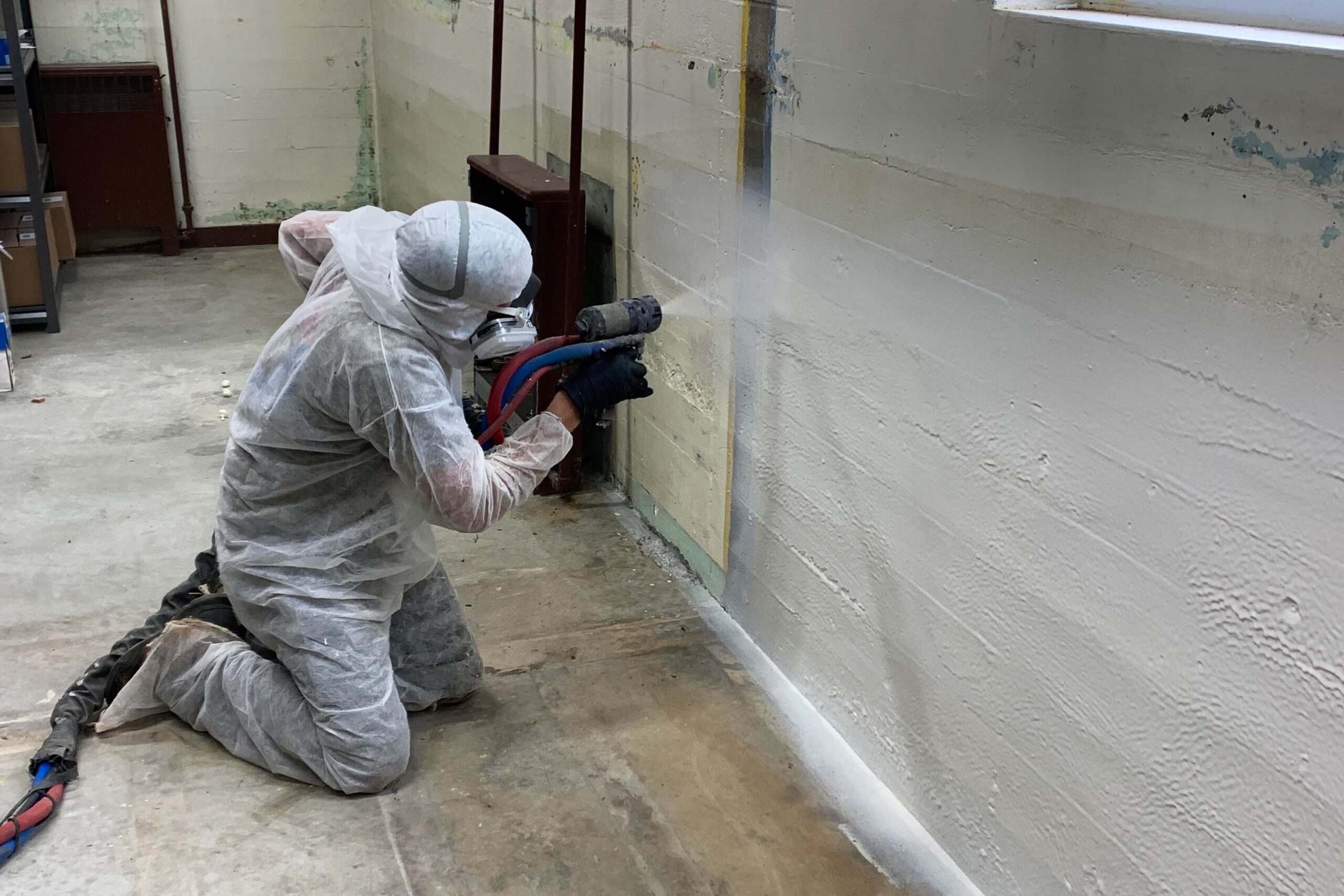
This is because polyurea can be applied very quickly and used for large infrastructure projects. It could be coated in a matter of hours, not days, for pipeline, containment tanks and bridge decks. It flexed to accommodate structure and prevented cracks and failures. It was different from traditional coatings in that it stuck to wet surfaces, which came in handy in environments that were prone to moisture.
The military identified the potential of polyurea very fast. It was found that it could be used to reinforce buildings against blasts and to protect vehicles against corrosion. It starts to use in high security facilities, military bases and naval ships by governments.
Research is still ongoing to improve on polyurea and other protective coatings. Chemists are still working on the development of hybrid formulations that can enhance the adhesion, chemical resistance and product life. Some coatings now have ceramic enhancers to increase the hardness. Some use nanotechnology to enhance the molecular bonding. These developments are expected to enhance the protection of coated surfaces and minimize on the need for maintenance.
Protection is also a concern with regard to sustainable protective coatings. Manufacturers are developing bio-based and low VOC systems. Advances in spray technology enable the application of thinner, more economical coatings with reduced material usage. New smart coatings that transform their properties with temperature or exposure to chemicals may also improve performance.
Polyurea is still at the forefront of coating technology. Its speed, strength and adaptability make it the go-to solution for protection from long-term exposure requirements across many industries. Protecting against wear, weather and damage will become increasingly important as technology improves.

